

Modern brise soleil has become one of the most sought-after architectural features. It no longer just provides shade: it controls sunlight, cuts energy demand and shapes the look and feel of a space. Here we bring together examples of modern brise soleil for façades, the types available, the materials that work best in each climate and the key points for choosing the right one for every project.
What is modern brise soleil
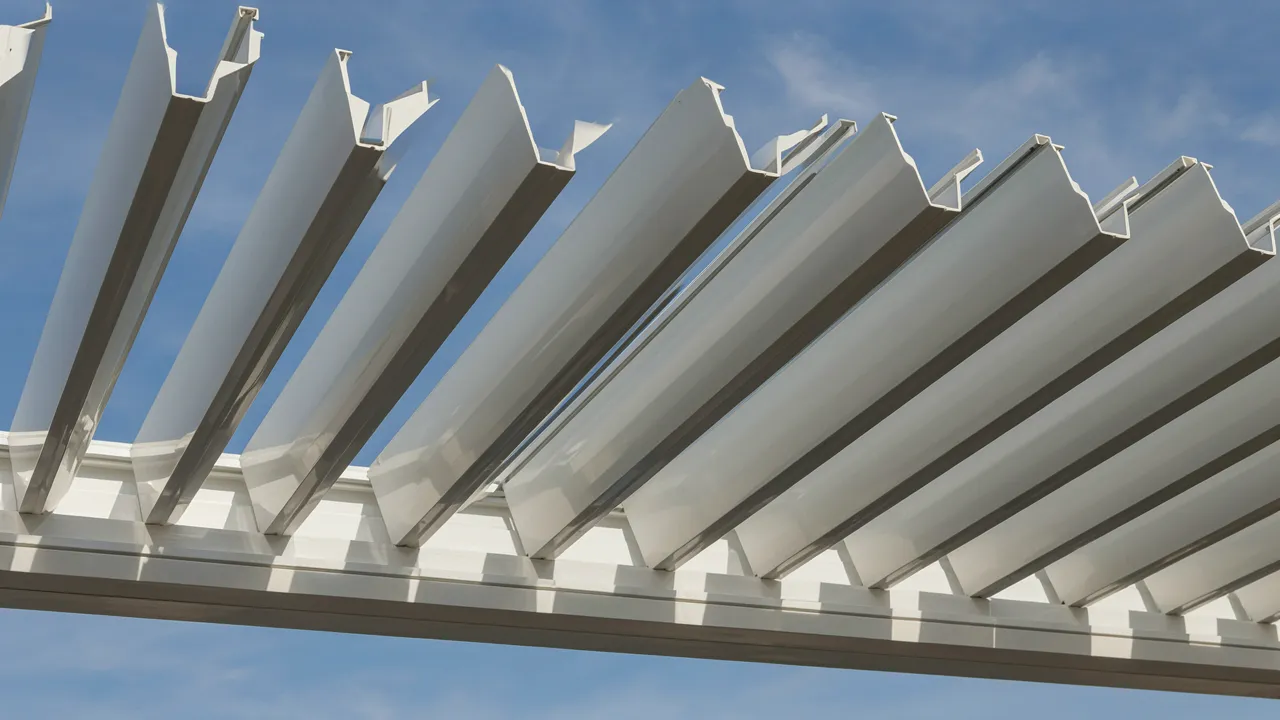
A brise soleil is an architectural element, fixed or movable, built into a home or commercial building to control the direct solar radiation coming in through windows and openings. Unlike a traditional awning, it is part of the building's design language: its lines, materials and proportions are decided at the design stage, not added afterwards.
Its main job is passive solar shading, which means it delivers thermal comfort without using any energy. A well-designed brise soleil blocks the sun in summer, when it is high in the sky, and lets it through in winter, when it sits lower. It is a principle that bioclimatic architecture guidelines have included for decades.
Benefits of installing modern brise soleil
The benefits of brise soleil for homes fall into four main areas:
• Energy efficiency: in properly sized solar shading systems, it cuts the cooling load by up to 30%.
• Indoor comfort: it prevents glare, regulates natural light and keeps temperatures steady without overusing air conditioning.
• Protection for materials: by limiting direct UV radiation, it extends the life of furniture, wooden floors and window frames.
• Aesthetic and architectural value: a well-designed brise soleil gives the façade its own identity and often adds value to the property.
Types of modern brise soleil
There are several types of modern brise soleil depending on their orientation, whether they move and how they are built. The right choice depends on which way the façade faces, the local climate and the design language of the project.
Horizontal brise soleil
Horizontal brise soleil is the most effective option on south-facing façades, where the summer sun is high. It blocks that overhead light in the hot months and lets the low winter sun in.
Vertical brise soleil
Vertical brise soleil is designed for east and west-facing façades, where the sun comes in at a low angle early in the morning or late in the afternoon. It usually takes the form of screens or vertical louvres, often adjustable, that filter the light without blocking the view.
Fixed and movable brise soleil
Fixed brise soleil is solid, stable and needs very little maintenance. Movable or adjustable systems, such as motorised louvres, sliding panels or bioclimatic systems, offer maximum flexibility, as they let you adjust how much light comes in at any time of day.
Most common materials for modern brise soleil
The material affects the durability, the maintenance and the final look of the brise soleil. These are the most common:
• Powder-coated aluminium: slim lines and a minimalist look, very high durability (over 25 years) and low maintenance.
• Corten steel: a warm, industrial feel, high durability as it protects itself, and low maintenance.
• Treated timber: a natural, warm finish, medium-to-high durability and medium maintenance, with regular varnishing.
• Engineered wood or WPC: the look of timber with greater resistance, high durability and low maintenance.
• Ceramic or GRC: adds volume and texture, with very high durability and very low maintenance.
• Technical fabric (screen): light and contemporary, with medium durability and medium maintenance.
How to choose the right brise soleil
Before deciding on a brise soleil, it is worth answering these five questions, in this order:
• Which way does the opening face? South calls for horizontal brise soleil; east and west, vertical. North-facing openings rarely need it.
• What is the climate like? Whether it is Mediterranean, Atlantic, continental or hot and dry affects both the materials and whether it should move.
• Fixed or movable? Fixed if simplicity is the priority; movable if you want maximum control over light.
• What budget and maintenance can you take on? Aluminium and ceramics keep maintenance down; natural wood needs more care.
• What does the architecture call for? The brise soleil should read as part of the house, not as an add-on.
Maintenance and lifespan of modern brise soleil
How long a brise soleil lasts depends on the material and how exposed it is. Motorised systems, such as bioclimatic pergolas or adjustable louvres, should also have an annual technical check of the motor, seals and guides. As a general guide:
• Powder-coated aluminium: 25 to 35 years with an annual clean.
• Corten steel: over 40 years, with virtually no maintenance.
• Natural timber: 15 to 25 years, with varnishing every 2 to 3 years.
• Engineered wood or WPC: over 25 years with regular cleaning.
• Technical fabrics: 10 to 15 years for the fabric; the frame lasts much longer.
Frequently asked questions about modern brise soleil
What is modern brise soleil and how is it different from an awning?
It is an architectural element, fixed or movable, built into the façade or roof to control solar radiation. Unlike an awning, it is usually part of the project from the start, uses rigid materials (aluminium, timber, steel or ceramics) and has an aesthetic and compositional role, not just occasional shade.
What are the most common types of brise soleil for homes?
The main types are horizontal brise soleil (eaves and overhangs), vertical brise soleil (louvres and screens), bioclimatic pergolas, fabric screens and architectural lattices. The choice mainly depends on the orientation of the façade and the climate.
Which orientation does horizontal brise soleil need, and which does vertical?
Horizontal brise soleil works best on south-facing façades, where the summer sun is high. Vertical brise soleil performs better on east and west-facing façades, where the sun comes in at a low angle in the morning or afternoon.
How much does it cost to install brise soleil on a home?
It depends a great deal on the material, the size and whether it is motorised. As a rough guide, a fabric screen starts at €250–400/m², a standard bioclimatic pergola ranges between €600 and €1,000/m², and bespoke solutions in aluminium, engineered wood or Corten steel can exceed €1,200/m². It is best to get several quotes and always check the manufacturer's guarantee.
Which material is best for brise soleil: aluminium, timber or Corten steel?
There is no single answer, but as a quick guide: powder-coated aluminium offers the best balance of durability and maintenance, engineered wood is ideal when you want visual warmth, and Corten steel gives a sculptural, very long-lasting finish. In coastal climates, aluminium and stainless steel are the better choice because they resist salt.
What maintenance does modern brise soleil need?
In most cases, very little. Aluminium and Corten steel only need cleaning once a year, while natural timber needs varnishing every 2 to 3 years. Motorised systems, such as bioclimatic pergolas or adjustable louvres, should have an annual technical check.