

Knowing how to clean a parasol properly is the difference between it lasting 10 years or more than 25. A parasol accumulates dust, pollen, leaves, pollution, salinity and moisture, and each material requires a different method. In this guide we explain step by step how to clean a parasol according to its type and material, which products to use, which to avoid, and how often to do it to preserve both its look and its performance.
Why it's important to clean a parasol regularly
A parasol is exposed to the elements 365 days a year. Dust, pollen, leaf debris, bird droppings, urban pollution particles and, in coastal areas, salinity settle on its surface. If a parasol isn't cleaned regularly, this buildup:
- Attacks the surface finish: it stains, dulls and, on some materials, can even corrode the piece.
- Reduces solar performance: accumulated dust lowers reflective and filtering capacity.
- Blocks the mechanisms: on adjustable louvers and bioclimatic pergolas, dirt causes jamming and misalignment.
- Shortens the lifespan: the difference between correct and incorrect maintenance can amount to more than 10 years of durability.
How often should a parasol be cleaned
The cleaning frequency for a parasol depends on the material, the environment (urban, coastal, rural) and the level of exposure. As a general rule, light cleaning (cloth and water) should be done once a month in spring and summer, especially if there is pollen.
A full clean should be carried out twice a year, in spring (before the heat) and autumn (before winter). You can also do extra cleanings after storms with strong wind, dust haze episodes, snowfall, or if there are nearby trees dropping leaves and resin. In coastal areas it is recommended to increase frequency by 50% due to ambient salinity.
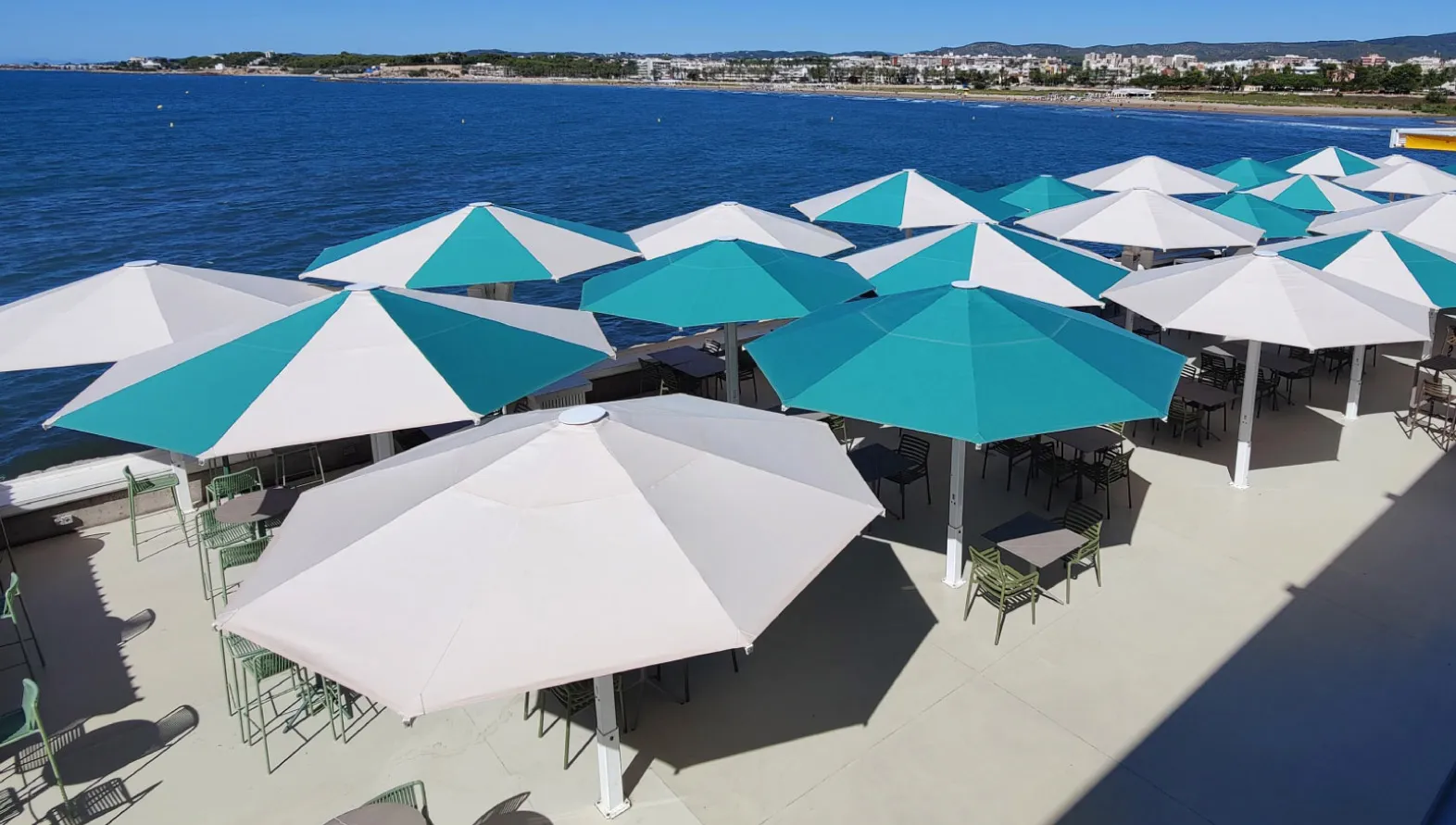
Materials and products needed to clean a parasol
Before starting, prepare the following items:
- A bucket of lukewarm water (not hot).
- Neutral soap or mild dish soap, never abrasive.
- Soft sponge or microfibre cloth (avoid metal scourers).
- Soft-bristle brush for joints and areas with embedded dirt.
- Low-pressure hose for rinsing. Never use a pressure washer.
- Stable ladder and gloves to work safely.
- Dry cloth to prevent limescale marks when drying.
How to clean an aluminium parasol step by step
Aluminium (lacquered or anodised) is the most common material in modern parasols. It's durable, but its finish is easily damaged by acidic or abrasive products. Follow these steps:
- Remove dry dust. Run a microfibre cloth or a duster over it before applying water. This prevents dust from scratching the surface once wet.
- Prepare the solution. Lukewarm water with a few drops of neutral soap or dish soap. No ammonia, bleach or industrial degreasers.
- Clean with a soft sponge. Rub with straight back-and-forth movements, never circular: circular movements leave uneven marks on aluminium.
- Rinse with clean water. Low-pressure hose or bucket. Make sure to remove all the soap.
- Dry immediately. With a dry cloth to avoid limescale marks and drip traces.
- Stubborn stains. For hard-to-remove dirt, mix white vinegar diluted to 50% with water and apply with a soft cloth. Leave for 5 minutes and rinse thoroughly.
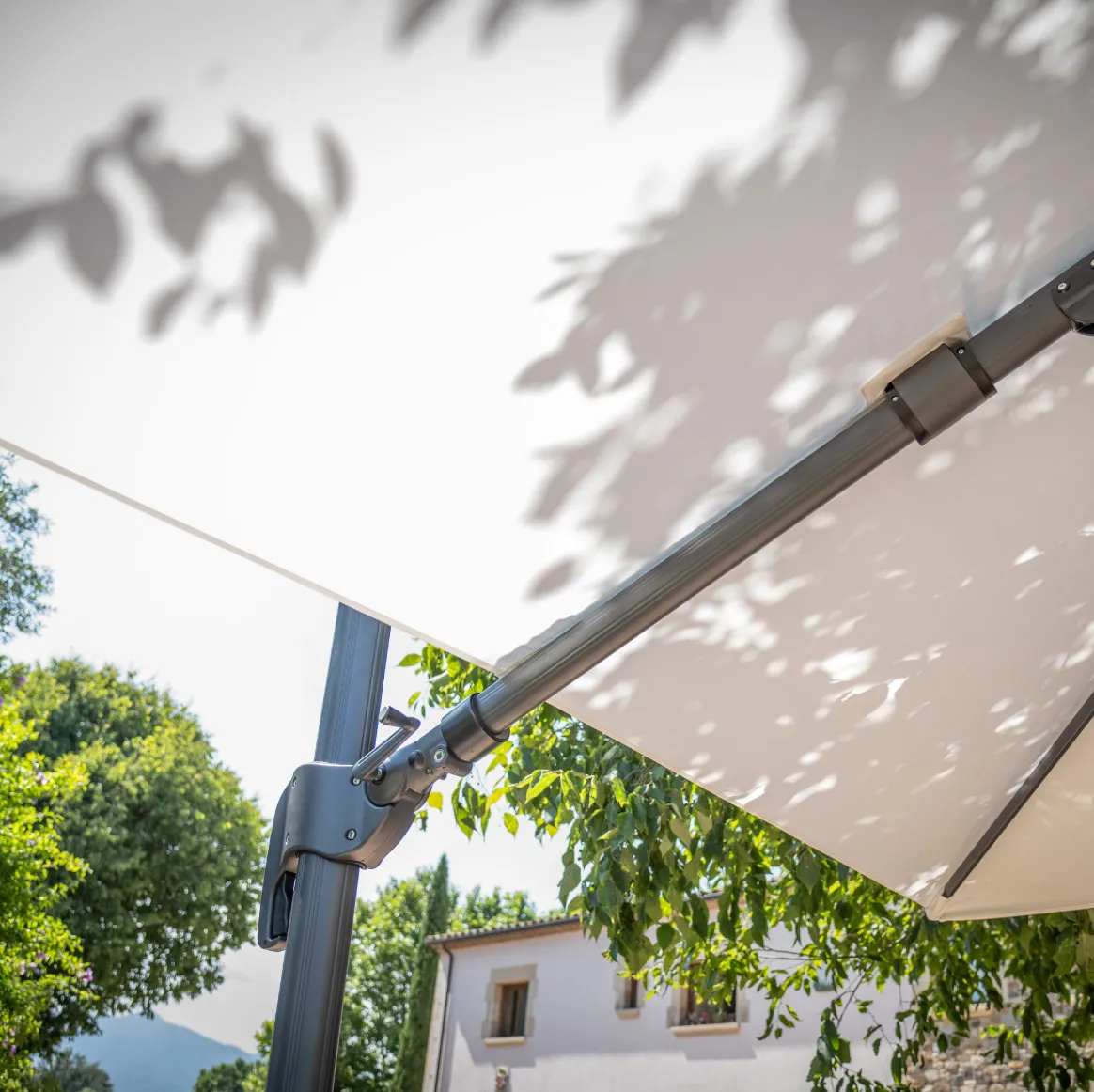
How to clean a wooden parasol
Wood (natural or treated) is more delicate and requires gentler cleaning with water, because moisture can lift varnish or rot the fibre:
- Dry brushing. Use a soft-bristle brush always following the direction of the grain.
- Damp cloth, not soaked. Lukewarm water with neutral soap or a soap specific to outdoor wood. The cloth should be wrung out as much as possible.
- Minimal rinsing. Another clean, damp cloth to remove the soap. Don't hose down the wood.
- Air drying. Let it dry completely before applying any treatment.
- Protective treatment. Every 2-3 years, apply an oil or outdoor-specific stain. This repels water and UV rays and extends the parasol's lifespan.
If mould stains appear, gently dry-sand the area with fine-grit sandpaper and reapply the protective treatment. For technical wood (WPC), neutral soap and water is enough: no oiling required.
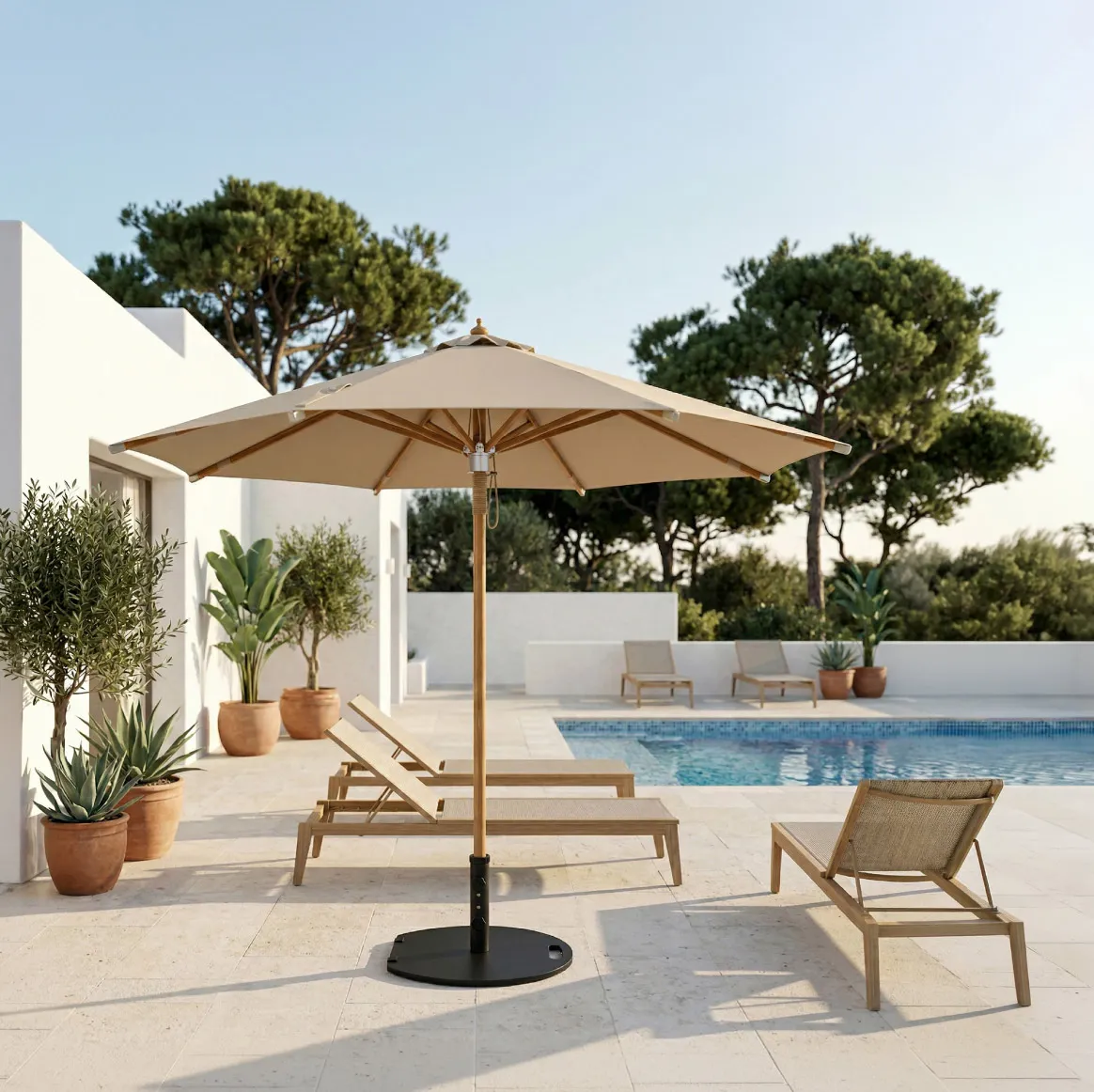
How to clean a fabric or screen parasol
Fabric parasols (awnings, screens, technical canvas) accumulate dust and, over time, green stains (algae) or reddish stains (rust from metal elements):
- Dry vacuuming. Run a soft-bristle brush or a vacuum with a soft nozzle over it to remove dust and pollen.
- Mild solution. Lukewarm water with neutral soap or a soap specific to technical fabrics. Avoid bleach, never use chlorine-based cleaners: they yellow and degrade the fibres.
- Apply with a soft brush. Rub gently on the outer face. Focus on stained areas without pressing too hard.
- Rinse with a low-pressure hose. Make sure to remove all the soap; residue creates white stains when it dries.
- Dry completely before retracting. If you store a wet awning or screen in its housing, mould will appear within days.
Common mistakes when cleaning a parasol
When cleaning a parasol there are a number of mistakes that come up again and again and are worth knowing so you can avoid them. The most serious, and the number one cause of breakdowns in bioclimatic pergolas, is using a high-pressure washer: it damages seals, motors and finishes, often irreversibly. Along the same lines, applying acidic products such as hydrochloric acid solutions, industrial descalers or chlorine-based cleaners damages both aluminium and technical fabrics, altering the lacquer and weakening the fibres.
Another common error is resorting to metal scourers or hard-bristle brushes, which irreversibly scratch the lacquer finish on aluminium and treated wood, leaving marks that can no longer be hidden. In the specific case of aluminium, rubbing with circular movements creates uneven marks that, although not visible up close, become noticeable under certain light; the correct approach is always to work with straight back-and-forth movements, in a single direction.
The mistakes don't end with the cleaning process itself. Retracting a fabric parasol while it's still wet causes mould to appear in less than a week, so it's worth making sure the fabric is completely dry before folding it or storing it in its housing. It's also very common not to check the gutters on bioclimatic pergolas: blockage from leaves, pollen or moss is invisible until the first leak appears, and by then the damage is usually done. Finally, greasing motors and mechanisms unnecessarily is counterproductive: excess lubricant attracts dust, forms an abrasive paste and, far from improving performance, makes it worse. The rule is simple: lubricate only where and when the manufacturer indicates.
Frequently asked questions about how to clean a parasol
Can a parasol be cleaned with a high-pressure washer?
No. A high-pressure washer is not recommended for any type of parasol: it damages finishes, seals, motors and orientation mechanisms. The recommended option is a low-to-medium pressure hose or a bucket of water.
What products should not be used to clean a parasol?
You should avoid: bleach, hydrochloric acid solutions, ammonia, industrial degreasers, organic solvents, metal scourers and hard brushes. All of these attack the finishes (lacquer, anodised coating, varnish, technical fabrics) and reduce the parasol's lifespan.
How do you clean an aluminium parasol without scratching it?
To clean an aluminium parasol safely, first remove dry dust with a microfibre cloth, then apply lukewarm water with neutral soap using a soft sponge, and always rub with straight back-and-forth movements, never circular. Rinse and dry with a clean cloth.
Do I need a professional to clean the parasol?
For routine cleaning, no: with simple materials any owner can do it. It is worth hiring a professional for the annual technical inspection on motorised systems (motor, sensors, lubrication, adjustments), and in any case of breakdown, play in the mechanism, or unusual noise.